Most people think about their hair constantly; the shine, the softness, the way it looks on a good day. But the scalp? That often gets overlooked, treated as nothing more than a surface to shampoo and move on from. Scalp health and hair health are two distinct things, and confusing the two is one of the most common reasons hair routines fall short.
At Thrive NOLA Spa, we believe that thriving starts at the root—literally. Understanding what sets scalp health apart from hair health is the first step toward a care routine that actually works, from the inside out.
What Is Scalp Health?
Your scalp is skin—living, active skin—and it functions more like the rest of your body than most people realize. It produces natural oils, houses thousands of hair follicles, supports circulation, and responds to stress, hormones, and environmental exposure. Scalp health refers to the overall condition of the living tissue and its ability to function well.
A healthy scalp is balanced: it produces just enough sebum to moisturize without feeling greasy, stays free of persistent irritation or flaking, and maintains good circulation to support the follicles beneath the surface. Common signs that scalp health may be off include dryness, excess oiliness, product buildup, sensitivity, dandruff, or tension that seems to settle right at the top of your head, a place where stress has a tendency to show up first.
What Is Hair Health?
Hair health refers to the condition of the hair strand itself: its strength, moisture retention, elasticity, and overall appearance. Unlike the scalp, hair strands are not living tissue. They’re made of keratin, and once they emerge from the follicle, they can be treated, conditioned, and improved, but they can’t heal the way skin can.
This is an important distinction. Common hair health concerns like breakage, split ends, dryness, dullness, and thinning at the strand level are all real, but they require a different set of solutions than scalp concerns do. Hair masks, bond-repair treatments, and deep conditioners work at the strand level. They won’t address what’s happening at the root.
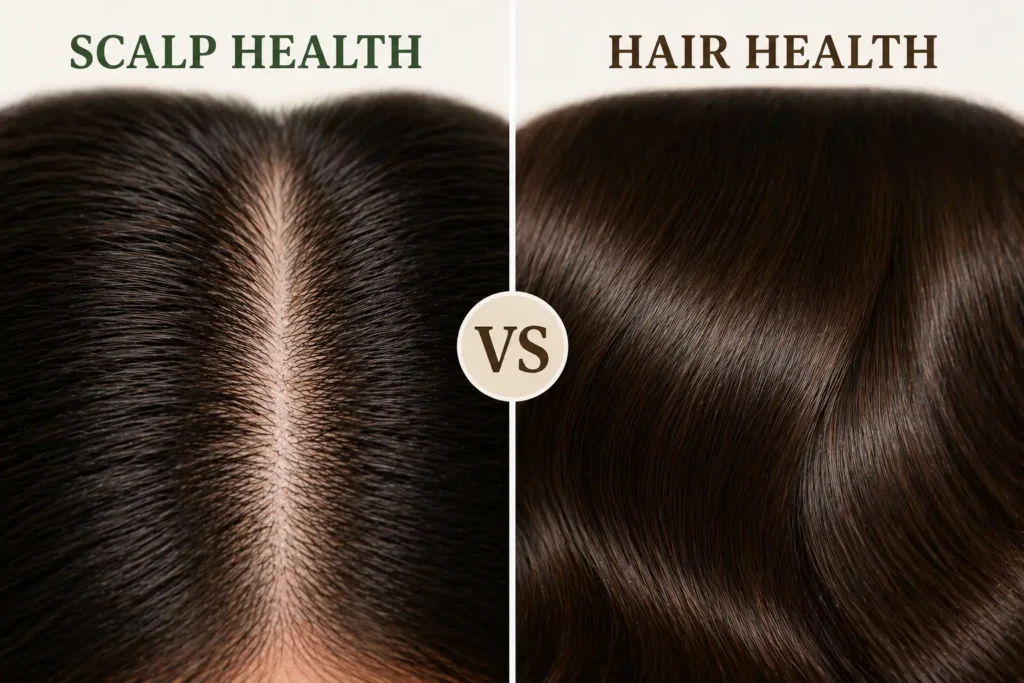
Key Differences Between Scalp and Hair Health
The most fundamental difference is this: the scalp is alive, and the hair strand is not. That single distinction changes everything about how you care for each.
Scalp care is root-level care. It’s about creating a healthy environment for follicles to thrive. Hair care is strand-level care—maintaining and protecting what’s already grown. The products that serve each are different, too. Scalp serums, exfoliants, and targeted treatments belong at the root. Conditioners, masks, and strengthening treatments belong on the lengths and ends.
Conflating the two leads to routines that miss the mark. Over-conditioning at the root causes buildup that can clog follicles and weigh hair down. Ignoring the scalp while focusing only on the strand leaves the source of the problem untouched. Knowing the difference puts you in control of a routine that actually addresses both.
How Scalp Health Affects Hair Growth
Hair follicles live in the scalp. If the environment around them is compromised, hair growth is too. It’s that direct. Scalp inflammation, persistent product buildup, and poor circulation can all contribute to slower growth, increased shedding, and hair that feels thinner or more fragile over time.
Chronic tension doesn’t just affect mood—it restricts circulation, can disrupt the hair growth cycle, and often manifests as tightness, sensitivity, or discomfort right at the scalp. Stress is worth naming here specifically. It’s one of the more overlooked connections between overall well-being and hair health.
The positive side of that equation is equally true: a clean, nourished, well-circulated scalp creates the conditions for stronger, thicker, more resilient hair growth. Caring for the scalp isn’t separate from caring for your hair. It’s the foundation of it.
Scalp Care Tips for Better Hair Outcomes
A few consistent habits can make a meaningful difference in scalp health over time:
- Use a gentle, sulfate-free shampoo that cleanses without stripping the scalp’s natural oils
Exfoliate regularly to remove product buildup and support healthy circulation, even once or twice a month can help - Incorporate scalp massage into your routine; a few minutes a few times a week encourages blood flow to the follicles
- Avoid applying heavy conditioners or oils directly to the root, where they can contribute to buildup
- Stay hydrated and manage stress where you can; both show up on the scalp more than most people expect
A healthy scalp feels comfortable, balanced, and free of persistent irritation. If yours doesn’t, it may be time to look beyond the bottle.
Hair Care Tips That Support Scalp Health
Good hair care habits can also protect the scalp from unnecessary strain:
- Rinse thoroughly: product residue migrates toward the root and contributes to the buildup you’re working to avoid
Limit heat application at the root, where the scalp is most sensitive to damage - Choose lightweight, non-comedogenic formulas that won’t sit heavily on the follicle opening
- Trim regularly; split ends and breakage can travel upward when left unaddressed, adding stress to the strand over time
When to Seek Professional Scalp Treatments
At-home care is a strong starting point, but some scalp concerns go deeper than a good shampoo routine can reach. If you’re experiencing persistent flaking or itching, noticeable thinning, buildup that won’t budge, or stress-related tension that’s settled into the head and neck, it may be time to consider professional support.
At Thrive NOLA Spa, our Head Spa Treatment is a restorative, scalp-focused service designed for exactly that moment. Rooted in Japanese head spa traditions and adapted for modern wellness, the treatment combines gentle cleansing, targeted scalp detox, and rhythmic massage across the scalp, head, neck, and shoulders—areas where tension sneakily accumulates.
Each session begins with a personal check-in, so the experience is tailored to your scalp’s needs and your overall state of well-being. It’s non-invasive, adaptable for sensitive scalps, and requires no downtime, just an hour of intentional, unhurried care in a calm, welcoming space near the French Quarter. Many guests find it becomes a meaningful part of their wellness routine, returning every four to six weeks to maintain the benefits.
If your scalp has been asking for more attention, this is a natural next step. Reach out to our team to learn more or schedule your visit. We’d love to help you find what works for you.
Thriving Starts at the Root
Scalp health and hair health aren’t the same thing, but they’re deeply connected. The scalp is the foundation everything else grows from, and giving it real attention changes what’s possible for your hair over time. Understanding both is what makes the difference between a routine that maintains and one that truly restores.
Whether you’re refining your at-home habits or ready to experience professional scalp care for the first time, the path forward starts with knowing what your scalp actually needs and honoring it.